
For screenwriters who know structure... but still get "flat character" notes
For screenwriters who know structure...
but still get "flat character" notes
YOUR PLOT ISN'T
THE PROBLEM.
YOUR CHARACTERS ARE.
A simple 4-step system to build real, relatable, plot-driving characters — without guessing, overthinking, or rewriting the same scenes for months.
Available as a PDF and a physical book.
You'll be able to choose your format after you enter your email

30-day, Money back, no-questions-asked
You’ve done the work.
You outlined the story.
You followed the structure.
You hit the beats.
But when you reread your script…
It doesn’t grab you.
It doesn’t pull you in.
It doesn’t make you feel anything.
And that’s the scary part.
Because if you don’t care about the characters yet…
why would a reader, producer, or judge?
You don’t have a talent problem.
You don’t have a motivation problem.
You don’t need another structure book.
You’re stuck because no one ever gave you a clear system for building characters with emotional weight.
So you do what most writers do:
You rewrite dialogue.
You tweak scenes.
You move beats around.
And somehow… the characters still feel flat.
Strong plots don’t save weak characters.
Strong characters create strong plots.
This guide exists to fix that exact problem.
Not with vague advice like:
“Make them more relatable.”
“Give them flaws.”
“Add emotional depth.”
But with a repeatable, step-by-step system that shows you:
What your characters want (Victory)
What’s truly in their way (Obstacles)
How they fight for it (Tactics)
And what emotional wound drives every choice (Emotion)
So your characters stop serving the plot…
and start driving the story.
Instant download • Built for beginners + intermediates • Apply to your current draft in 48 hours
Not ready yet? Scroll to see what’s inside the Blueprint
Built from real-world screenplay feedback, coverage notes, and industry evaluation standards









This isn’t a “guru framework” or a one-size-fits-all formula.
It’s a practical character-building system designed to work inside your existing process.
Here’s what that system actually looks like —
and how you’ll use it on your current draft.
What's Inside The
Character Building Blueprint
A practical system you can apply to the draft you’re already working on — not something you have to “learn” before writing.
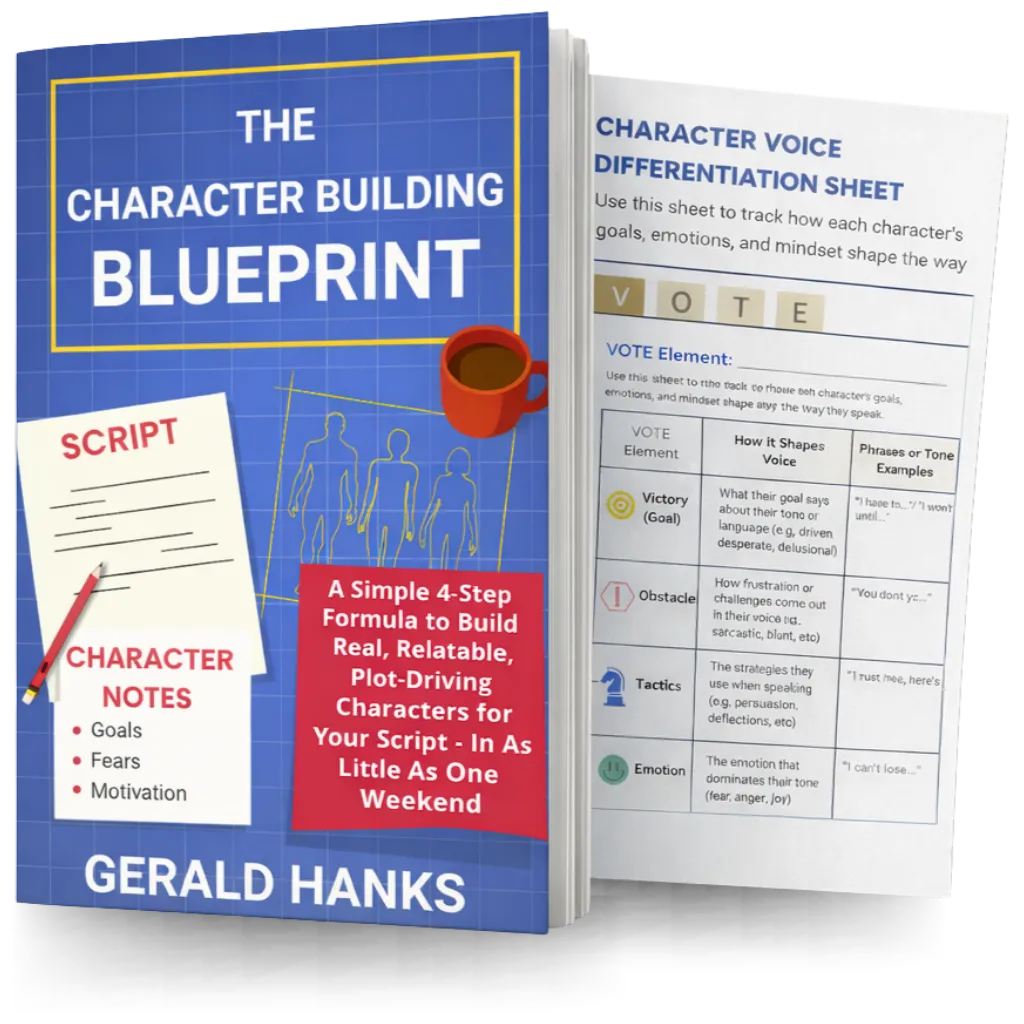
Shown: The Character Building Blueprint as a printed book and PDF
Instant digital download • Or choose the physical book format
This is not a theory book.
The Character Building Blueprint is a step-by-step system designed to help you diagnose why your characters feel flat — and fix the problem at its source.
Instead of guessing, rewriting endlessly, or hoping characters “click,” you’ll follow a clear process that works on any protagonist, antagonist, or supporting character.
At the center of the Blueprint is the VOTE Method:
Victory – what your character wants (clearly and specifically)
Obstacles – what’s in their way, internally and externally
Tactics – how they try to get what they want, scene by scene
Emotion – the emotional wound or need driving every choice
This framework forces emotional logic into your story — so character, plot, and dialogue finally work together.
How Writers Use the Blueprint
Before outlining, to build characters that generate plot
Mid-draft, to fix scenes that feel flat or mechanical
During rewrites, to stop patching dialogue and address root problems
On secondary characters, so they stop feeling like props
You don’t have to start over.
You apply this directly to the script you already have.
Inside the Blueprint, you’ll get:
The complete VOTE Method explained step by step
Guided worksheets to develop any character quickly
100+ character-building questions (no fluff, all actionable)
A character flaw & contradiction cheat sheet
Practical examples showing how VOTE changes scenes
Everything is designed to be used, not just read.
You don’t need to change your genre, your voice, or your process.
This system works with how you already write — it just gives your characters the emotional foundation they’ve been missing.
$17 • Instant access • No subscriptions • Yours forever
Why “Solid Structure” Still Leads to Flat Characters
Most writing advice isn’t wrong — it’s just incomplete.
You’ve probably been taught to start with structure.
Acts.
Beats.
Turning points.
Setups and payoffs.
That advice isn’t bad.
But structure explains what happens — not why your characters make it happen.
And that gap is where flat characters are born.
Plot-First Writing
Before outlining, to build characters that generate plot
Mid-draft, to fix scenes that feel flat or mechanical
During rewrites, to stop patching dialogue and address root problems
On secondary characters, so they stop feeling like props
Often leads to scripts that work — but don’t linger.
Character-First Writing
Start with what the character wants and fears
Let motivation drive decisions and conflict
Build scenes from emotional cause → effect
Allow plot and dialogue to emerge naturally
Creates stories that feel inevitable, not mechanical.
Plot-First Writing
Before outlining, to build characters that generate plot
Mid-draft, to fix scenes that feel flat or mechanical
During rewrites, to stop patching dialogue and address root problems
On secondary characters, so they stop feeling like props
Creates stories that feel inevitable, not mechanical.
Character-First Writing
Start with what the character wants and fears
Let motivation drive decisions and conflict
Build scenes from emotional cause → effect
Allow plot and dialogue to emerge naturally
Creates stories that feel inevitable, not mechanical.
Structure tells you where a story goes.
Character tells you why it moves.
When character motivation comes first, structure stops feeling rigid — and starts feeling organic.
That’s why writers who understand story still struggle with depth.
They’re missing the emotional engine underneath the plot.
The VOTE Method exists to fill that gap.
It gives you a simple way to design characters with:
Clear motivation
Built-in conflict
Consistent behavior
Emotional logic that holds up under pressure
So the structure you already know finally has something solid to rest on.
You don’t need to unlearn anything.
You just need to start one layer earlier.
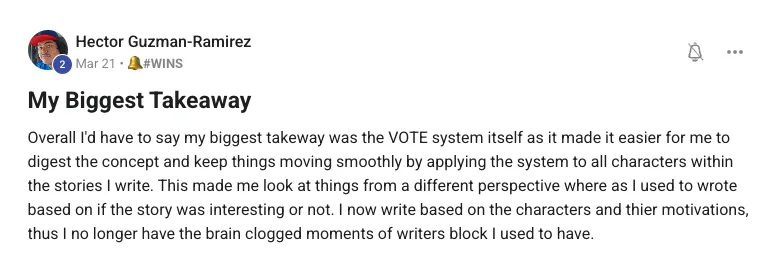
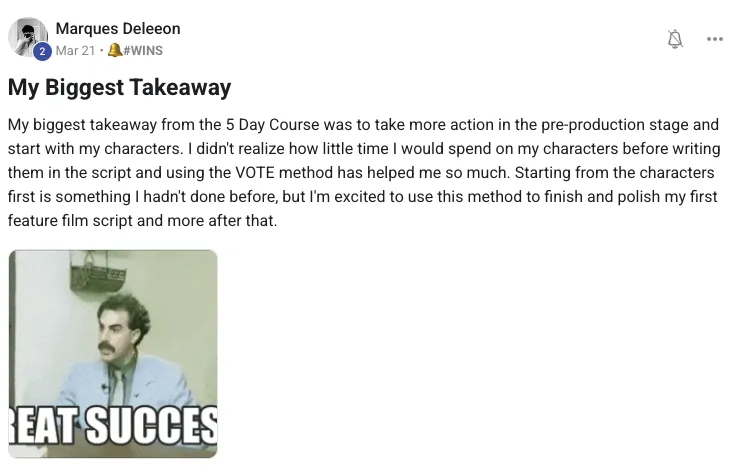
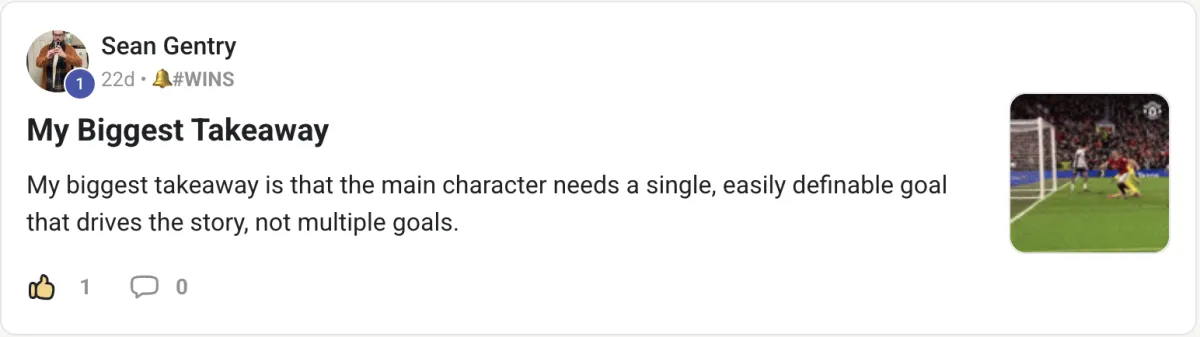
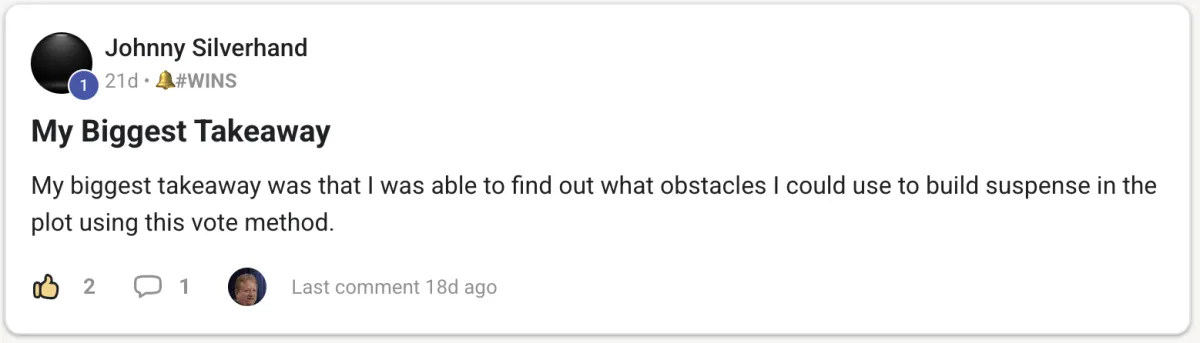
What Changes When Characters Finally Click
Not overnight success — just clarity, confidence, and momentum where there used to be friction.
CLARITY
Before:
“I know something’s wrong with my characters, but I can’t tell what — so every rewrite feels like guessing.”
After:
“I can look at a character and immediately see what’s missing — motivation, pressure, or emotional stakes — and fix it without touching the whole script.”
SCENE CONFIDENCE
Before:
“My scenes technically work, but they feel flat. I keep tweaking dialogue, hoping it’ll come alive.”
After:
“My scenes have direction now. Characters want something specific in every moment, so conflict and subtext show up naturally.”
CONSISTENCY
Before:
“My characters change depending on what the plot needs, and I don’t always know why.”
After:
“My characters behave consistently under pressure — even when they make bad choices. Nothing feels random anymore.”
MOMENTUM
Before:
“I stall out during rewrites because I’m afraid of breaking what already works.”
After:
“I know exactly what to adjust and what to leave alone. Rewrites feel focused instead of overwhelming.”
Writers who use the Blueprint don’t suddenly become different people.
They just stop second-guessing themselves.
The system gives them a way to trust their choices — because those choices are grounded in character logic, not instinct alone.

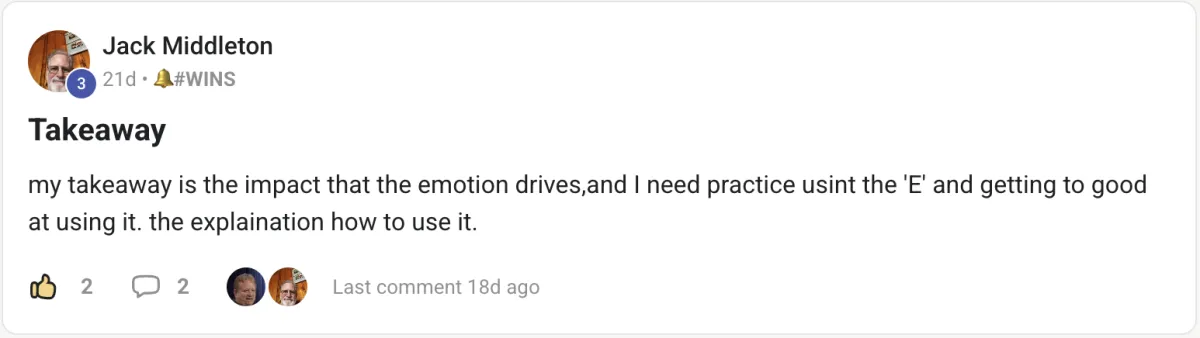
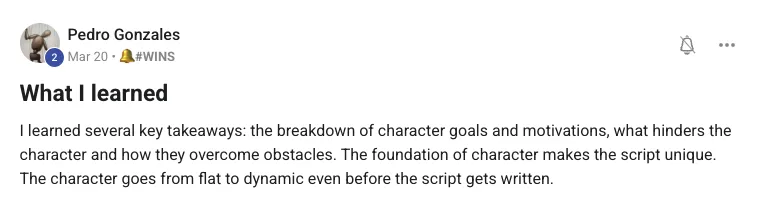
What Changes When Characters Finally Click



$17 • Instant access • Apply to your current script today
Want More?
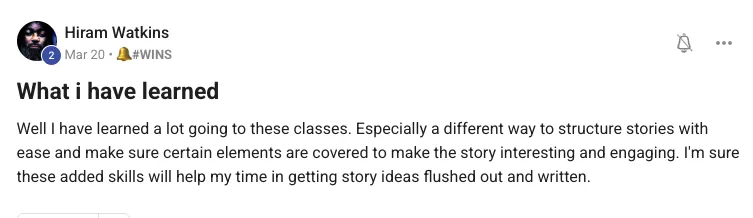
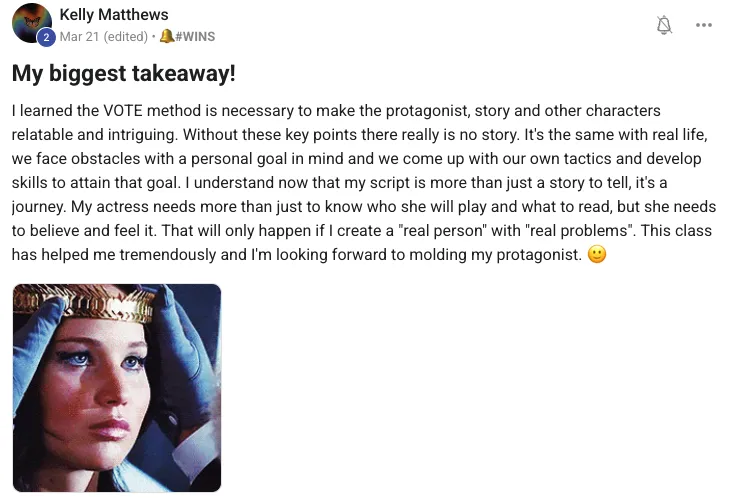
Hear How VOTE Has Helped Them...
Kris Mathis
Raven Raye
Mark Miller
Michael Richards
Marques Deleeon
Vivek Ahuja
$17 • Instant access • Money back, no-questions-asked

What you'll get when you download the blueprint
Everything is designed to be used immediately — not studied for weeks.
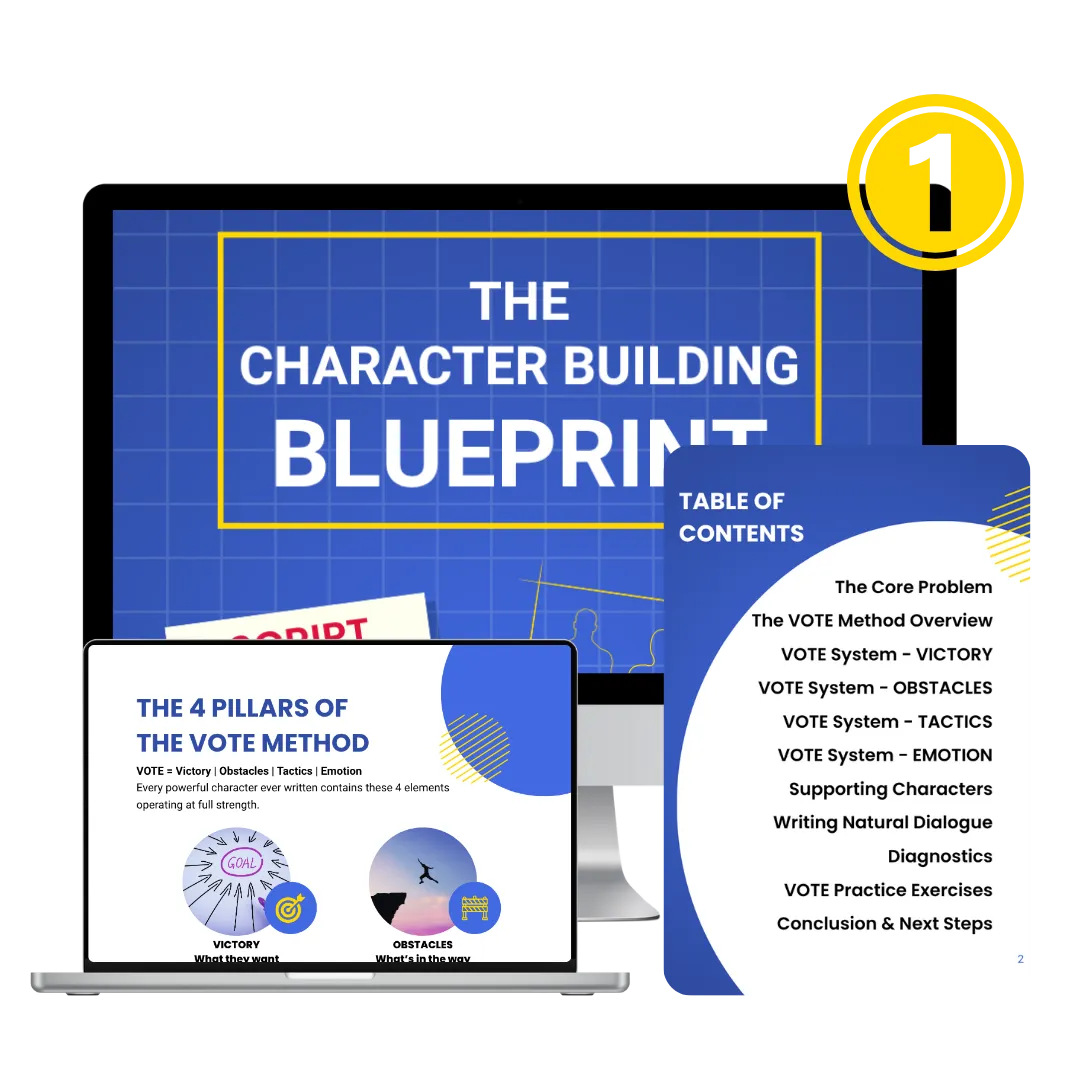
The Complete Character Building Blueprint (PDF)
A clear, step-by-step guide that walks you through the VOTE Method from start to finish.
You’ll learn how to:
Identify what your character actually wants
Apply meaningful pressure and opposition
Design choices that create conflict naturally
Ground every action in emotional logic
This is the core system — explained simply, without theory overload.
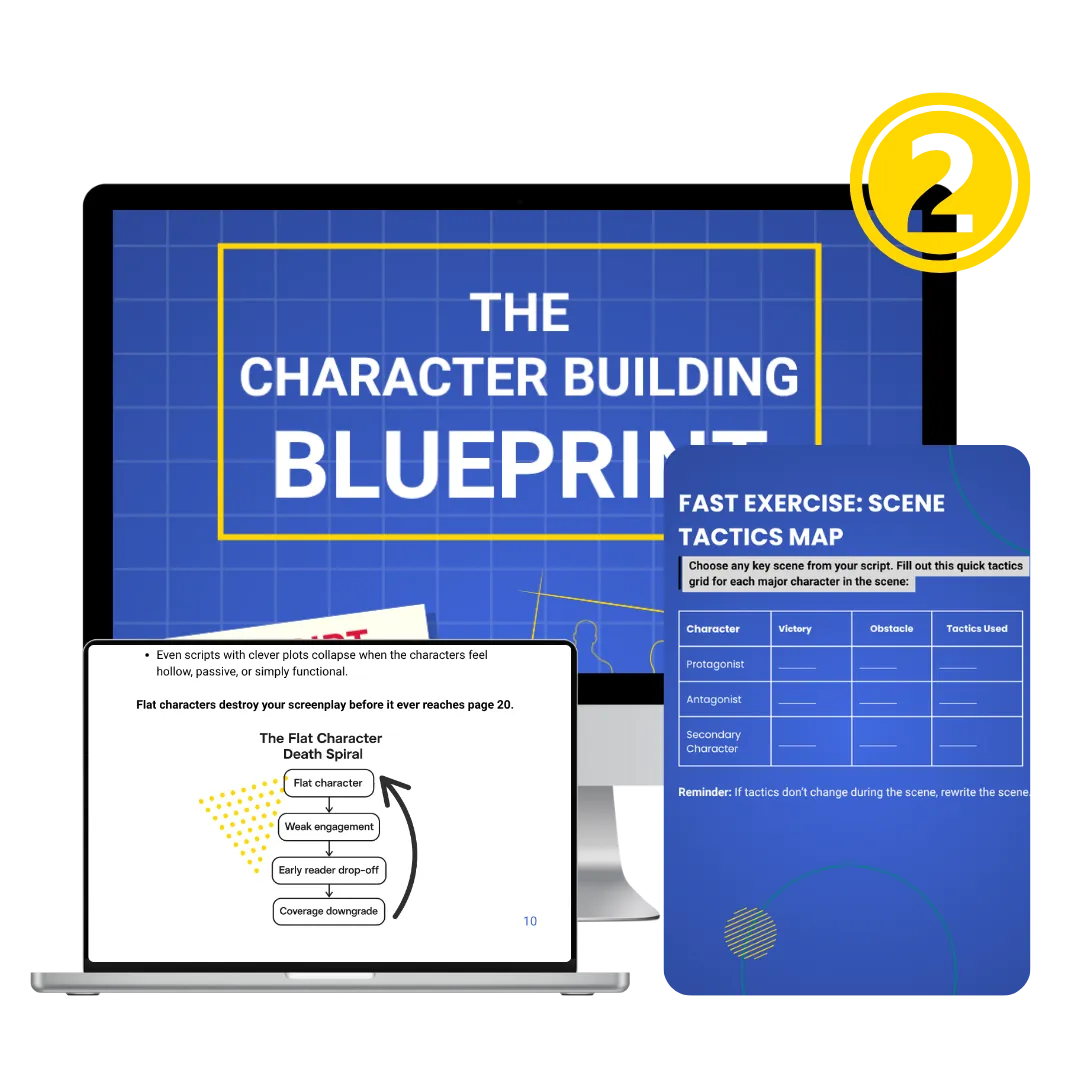
Printable & Fillable Character Worksheets
Worksheets that help you apply the VOTE Method to any character — protagonist, antagonist, or supporting role.
Use them to:
Diagnose flat or inconsistent characters
Clarify motivation and emotional stakes
Strengthen scenes before you rewrite them
These are tools you’ll reuse across projects.
Printable & Fillable Character Worksheets
Worksheets that help you apply the VOTE Method to any character — protagonist, antagonist, or supporting role.
Use them to:
Diagnose flat or inconsistent characters
Clarify motivation and emotional stakes
Strengthen scenes before you rewrite them
These are tools you’ll reuse across projects.
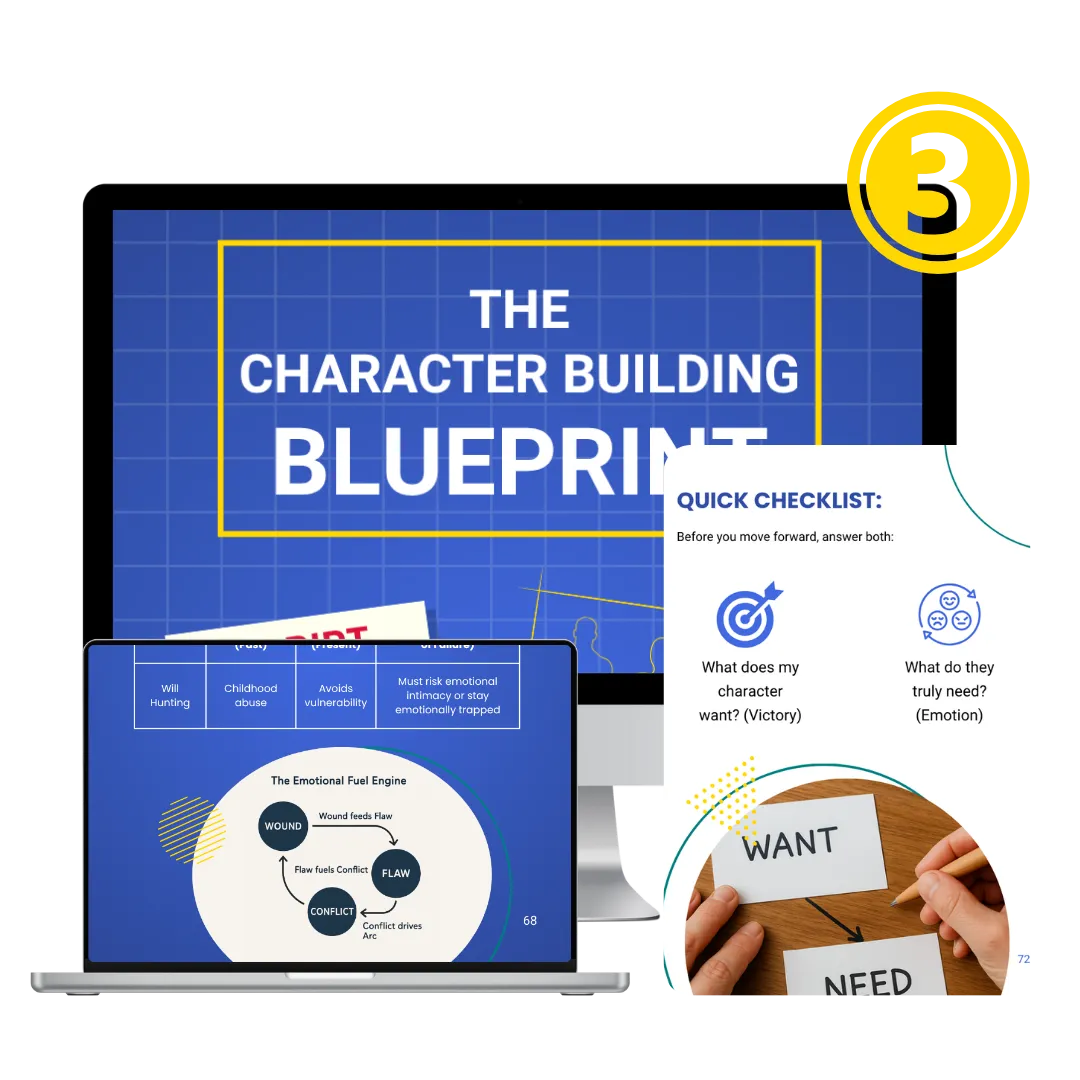
100+ Targeted Character Questions
A curated set of questions designed to surface:
Contradictions
Emotional wounds
Hidden motivations
Internal pressure points
No journaling prompts.
No filler.
Only questions that lead to usable story decisions.
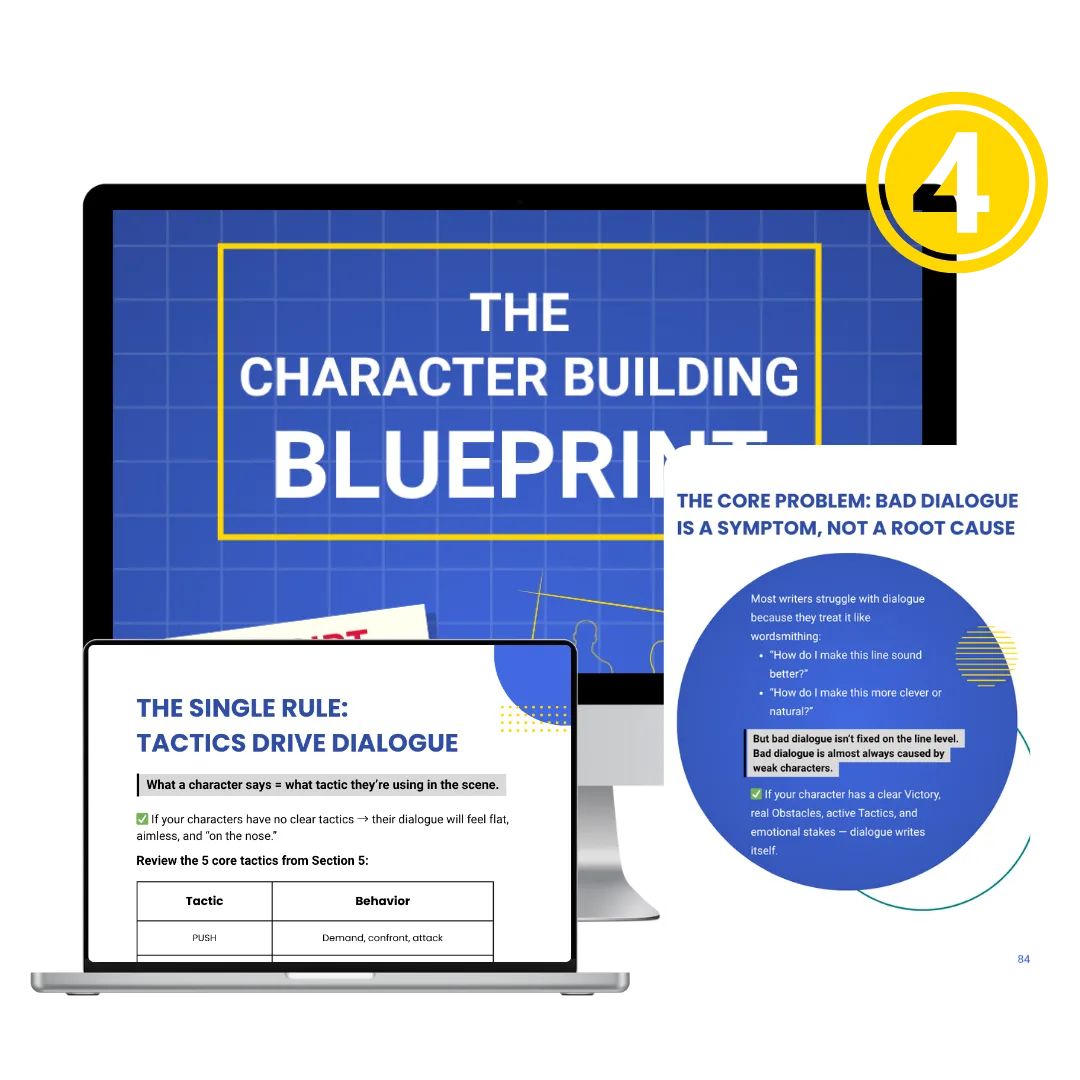
Character Flaws & Contradictions Cheat Sheet
A quick-reference guide to help you move beyond “likable flaws” and build characters with tension and complexity.
Use this when:
Characters feel too clean
Conflict feels forced
Stakes feel low
Character Flaws & Contradictions Cheat Sheet
A quick-reference guide to help you move beyond “likable flaws” and build characters with tension and complexity.
Use this when:
Characters feel too clean
Conflict feels forced
Stakes feel low
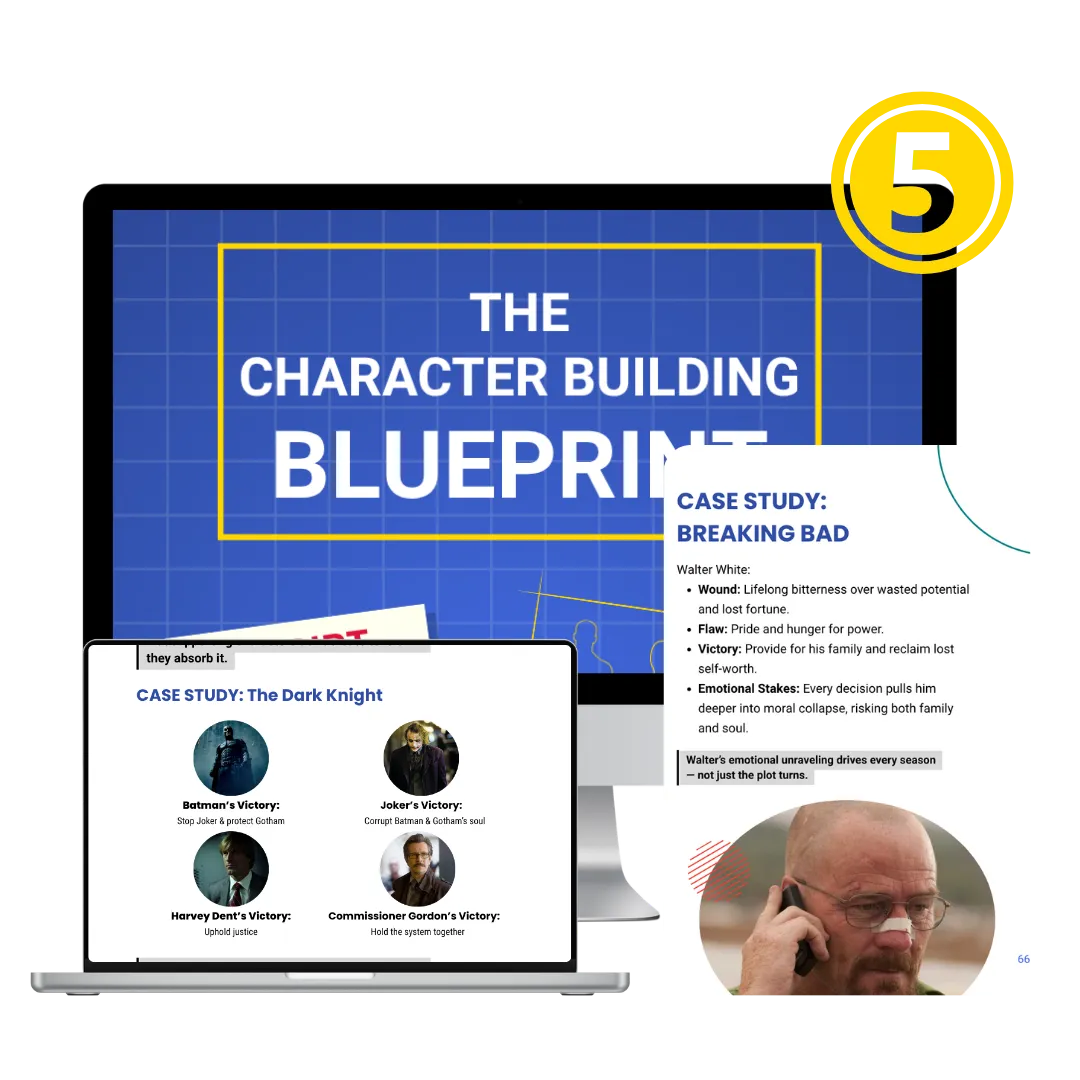
Examples That Show the Method in Action
Real, practical examples demonstrating how the VOTE framework changes scenes, decisions, and character behavior.
These examples are there to clarify, not overwhelm.
Exclusive Bonuses
Just for Writers Who Want to Go Deeper
Along with the Character Building Blueprint, you’ll get powerful bonus tools designed to sharpen your skills, speed up your writing process, and help you craft characters that truly stand out. These extras are built to work hand-in-hand with the main guide — and they’re only available right here, right now.
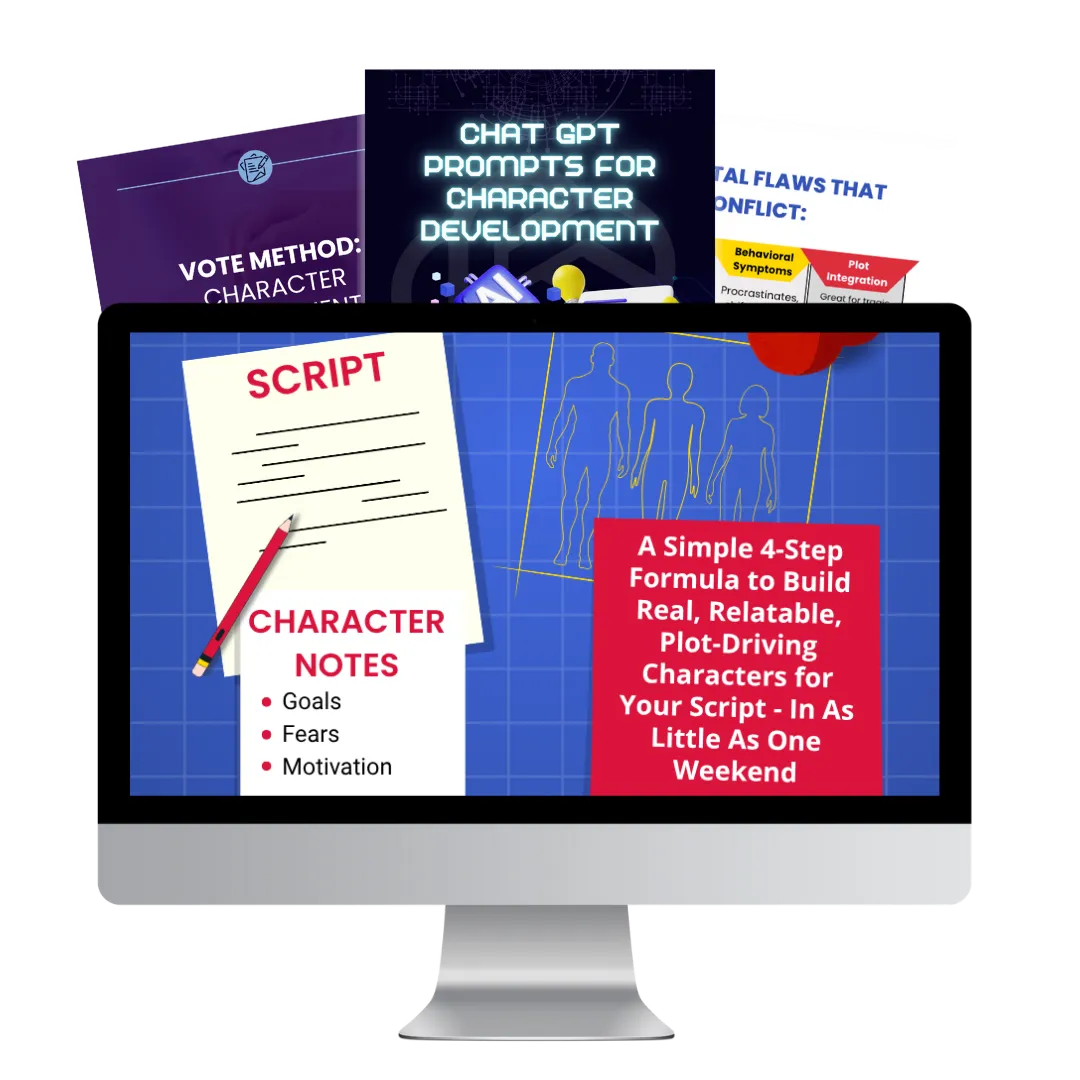
BONUS 1: 30 Story Questions to Instantly Deepen Any Character
Use this printable worksheet to flesh out goals, fears, backstory, and motivation — without guessing. Great for rewrites, new ideas, or finishing stuck drafts.
BONUS 2: Character Development Idea Generator – Over 100 ChatGPT Prompts
Stuck on what drives your character? This bonus gives you 100+ AI-powered prompts designed to spark fresh ideas for backstory, motivation, conflict, flaws, relationships, and more — utilizing the VOTE Method — so you never start with a blank page again.
BONUS 3: 15 Character Flaws That Drive Real Conflict
Unlock a curated cheat sheet of the most powerful, story-driving character flaws used in award-winning scripts — from ambition to avoidance. These flaws plug directly into your character arcs and create instant emotional tension.
$17 • One-time purchase • Start today

Get The Character Building Blueprint PDF Today!
CHARACTER BUILDING BLUEPRINT PDF
$17 USD
VAT/Tax Included
Instant digital download after purchase
Accessible on desktop, tablet, or phone
Use digitally or print pages you need
Lifetime access — no subscriptions
A Few Things You Might Be Wondering
Short, honest answers — no fine print.
Try the Blueprint Risk-Free
If you download the Character Building Blueprint and feel like it doesn’t give you clearer insight into your characters — or doesn’t help you move forward on your script — just reach out.
You won’t be questioned.
You won’t be pressured.
You won’t be pitched something else.
You’ll get your money back.
This exists to make sure you feel comfortable trying the system — not stuck with something that doesn’t help.
Still Got Questions?
Here's the Answers
Is this a PDF or a physical book?
Both. After entering your email, you’ll be able to choose between the downloadable PDF or the printed book + PDF bundle.
What exactly will this guide teach me?
You’ll learn how to build believable, emotionally engaging, plot-driving characters using the VOTE Method — a 4-step framework that gives every character a Victory (goal), Obstacles (conflict), Tactics (strategy), and Emotion (fuel).
This system helps you fix flat characters, create real arcs, and write dialogue that actually works — even if your plot is already solid.
Is this guide suitable for beginners?
Yes — it’s made for beginner to intermediate screenwriters. If you’ve ever felt like your characters are just “filling space,” this is for you. The steps are clear, no fluff, and designed so you can apply them immediately — no advanced theory required.
Do I need to rewrite my entire script to use this?
Not at all. You can use the VOTE Method before you write or plug it into any draft in progress. Many writers use it to reshape characters in just one weekend without blowing up their entire script.
How quickly can I see results?
Most writers report breakthroughs within 48 hours. That’s the power of having a clear system. You’ll go from “I don’t know what’s missing” to “I know exactly how to fix this” — fast.
Will this help if I’ve already studied structure books like Save The Cat or The Hero’s Journey?
Yes — those books are great for plot. But most don’t go deep into character development. The Character Building Blueprint fills that gap, helping your plot and dialogue work better because your characters finally drive them.
What resources come with the guide?
You get the complete 4-step PDF system, plus exclusive bonuses like:
- 100+ AI prompts to develop deeper characters fast
- A “Flaws That Drive Conflict” cheat sheet
- Dialogue fixer tips
- Real script examples from film/TV
- A 30-question character worksheet
And more.
How is this different from free advice online?
Most free advice says things like: “Make your characters more three-dimensional.” But no one tells you how. Gerald’s VOTE Method was born out of real-world experience — not theory – he based the VOTE method on an acting class he took in college to understand how actors break down scripts. That shift — seeing the page through an actor’s eyes — led him to develop a character system that works from the inside out.
This discovery has produced success in his screenwriting journey from winning multiple screenwriting awards to having his script Prodigal optioned by Vendetta Filmworks.
He’s studied directly with industry legends like Pamela Douglas (USC), Steve Kaplan, and Christopher Vogler, and has read hundreds of scripts for contests like Austin Film Festival, Coverfly, and the American Black Film Festival. He knows exactly why most characters fall flat — and how to fix them.
The VOTE Method is the result: a battle-tested 4-step system that builds characters with clear goals, inner fuel, and emotional resonance. No guesswork. No filler. Just what actually works on the page — and on screen.
Is there a guarantee if I’m not satisfied?
Yes. Try it for 30 days. If you don't feel it made your characters more compelling, email us for a full refund. No questions asked.
Does this only work for screenplays?
No. The VOTE Method is character-based, not format-based. You can apply it to film, TV, short films, novels, games, and more — anywhere characters make choices.
$17 • Instant access • One-time purchase • Money back, no-questions-asked
Copyright © 2026 Gerald Hanks. All rights reserved.
We improve our products and advertising by using Microsoft Clarity to see how you use our website. By using our site, you agree that we and Microsoft can collect and use this data.
Our privacy policy has more details | Disclaimer